Why Loan Applications Get Rejected?

Apply Loan

Applying for a loan can feel stressful. You submit documents, wait for approval, and then suddenly get a message saying:

“Your loan application has been rejected.”

This can be confusing, disappointing, and frustrating—especially when you really need the money. The truth is, loan rejection is very common, and most people don’t clearly understand why it happens.

In this detailed guide, you will learn:

  • The real reasons loan applications get rejected

  • How banks and lenders actually decide

  • What mistakes borrowers make unknowingly

  • How to improve approval chances next time

Everything is explained in simple English, step by step.


What Does Loan Rejection Mean?

Loan rejection means the bank or financial institution has decided not to approve your loan request.
This decision is based on risk assessment, not personal judgment.

Banks want to answer one basic question:

👉 “Will this person repay the loan on time?”

If the answer seems risky, the loan gets rejected.


Is Loan Rejection Permanent?

No.
Loan rejection is not permanent.

Most rejections happen because:

  • Information is incomplete

  • Financial profile is weak

  • Timing is wrong

With the right steps, you can easily improve your chances in the future.


Why Do Banks Reject Loan Applications?

Banks follow strict rules set by:

  • Internal risk policies

  • RBI guidelines

  • Credit bureaus

  • Market conditions

Let’s understand the most common reasons in detail.


1. How Does Low Credit Score Cause Loan Rejection?

Your credit score is the first thing lenders check.

Why Credit Score Is Important:

  • Shows repayment history

  • Reflects financial discipline

  • Predicts future behavior

Common Credit Score Issues:

  • Score below 650

  • Missed EMIs

  • Credit card defaults

  • High outstanding debt

A low credit score signals high risk, leading to rejection.


2. How Late Payments Affect Loan Approval?

Even one late payment can impact trust.

Late Payments Indicate:

  • Poor financial management

  • Unstable cash flow

  • Higher default risk

Regular late EMIs reduce approval chances for:

  • Personal loans

  • Credit cards

  • Home loans

  • Car loans


3. Can High Existing Debt Lead to Loan Rejection?

Yes, very often.

Banks calculate something called Debt-to-Income Ratio (DTI).

High DTI Means:

  • Too many EMIs

  • Less disposable income

  • Higher repayment pressure

If your EMIs exceed 40–50% of income, rejection chances increase.


4. How Income Instability Causes Loan Rejection?

Banks prefer predictable income.

Income Red Flags:

  • Freelancing without proof

  • New job with short tenure

  • Frequent job changes

  • Irregular business income

Stable income = lower risk = higher approval chance.


5. Why Incomplete Documents Get Loans Rejected?

Small documentation errors can cause rejection.

Common Document Issues:

  • Mismatch in name

  • Incorrect address

  • Missing income proof

  • Expired ID documents

Banks rely heavily on accurate documentation.


6. How Employment Type Impacts Loan Approval?

Some jobs are seen as more stable than others.

Higher Approval Chances:

  • Government employees

  • Large corporate employees

  • Established business owners

Lower Approval Chances:

  • Contract jobs

  • Startups with no history

  • Cash-based businesses

This is about risk, not value.


7. Can Multiple Loan Applications Cause Rejection?

Yes, this is a very common mistake.

Why Multiple Applications Hurt:

  • Each application creates a credit inquiry

  • Too many inquiries lower credit score

  • Lenders see desperation

Always space out loan applications.


8. How Age Affects Loan Approval?

Age plays an important role.

Risky Age Groups:

  • Very young applicants with no history

  • Applicants near retirement age

Banks want assurance of long-term repayment capacity.


9. Does Loan Purpose Matter for Approval?

Yes, lenders check loan purpose.

Approved Easily:

  • Home loan

  • Education loan

  • Car loan

Risky Purposes:

  • Debt consolidation without plan

  • Business without proof

  • Unclear personal use

Clear purpose increases trust.


10. How Business Losses Cause Loan Rejection?

For self-employed applicants, profitability matters.

Business Red Flags:

  • Continuous losses

  • Low net profit

  • No audited financials

Banks need proof that business can support EMI payments.


11. How Location Affects Loan Approval?

Banks consider geographic risk.

High-Risk Areas:

  • Unstable income regions

  • High default zones

This is common in unsecured loans.


12. Can Poor Banking History Lead to Rejection?

Yes.

Negative Banking Behavior:

  • Frequent overdrafts

  • Cheque bounces

  • Minimum balance failures

Banks check bank statements closely.


13. How Loan Type Impacts Rejection Chances?

Secured Loans:

  • Lower rejection

  • Lower interest

Unsecured Loans:

  • Higher rejection

  • Higher scrutiny

Personal loans are rejected more often than home loans.


14. Why Does Employer Reputation Matter?

Large, stable companies provide confidence.

Unknown or unstable employers may reduce approval chances.


15. How Credit Card Usage Affects Loan Approval?

Misusing credit cards can hurt badly.

Bad Credit Card Habits:

  • Paying only minimum due

  • Maxing out limit

  • Frequent late payments

Ideal usage is below 30% of limit.


16. Can Errors in Credit Report Cause Rejection?

Yes, and it happens more often than people think.

Common Errors:

  • Wrong loan status

  • Incorrect late payment records

  • Duplicate accounts

Always check your credit report before applying.


17. Why Guarantor Issues Cause Loan Rejection?

If guarantor:

  • Has low credit score

  • Has existing defaults

  • Has high debt

Loan may get rejected.


18. How Economic Conditions Affect Loan Approval?

During economic slowdown:

  • Banks become cautious

  • Approval rules tighten

  • Risk tolerance drops

Rejection may not be personal.


19. What Mistakes Do First-Time Borrowers Make?

First-time borrowers often:

  • Apply without checking eligibility

  • Ignore credit score

  • Choose wrong loan amount

Education solves this problem.


20. How to Avoid Loan Rejection in Future?

Smart Steps:

  • Improve credit score

  • Reduce existing debt

  • Maintain stable income

  • Apply only when eligible

  • Keep documents ready

Preparation is the key.


What to Do After Loan Rejection?

Don’t panic.

Correct Approach:

  • Ask for rejection reason

  • Improve weak areas

  • Wait 3–6 months

  • Apply again smartly

Rejection is feedback, not failure.


Final Thoughts: Loan Rejection Is Not the End

Loan rejection does not mean:

  • You are financially weak

  • You will never get a loan

It only means:
👉 “Not right now, not this way.”

With planning, discipline, and awareness, approval becomes easy.


Frequently Asked Questions (FAQs)

Q1. Does loan rejection affect credit score?

Multiple rejections can lower score slightly.

Q2. How long should I wait after rejection?

At least 3–6 months.

Q3. Can I apply to another bank immediately?

Not recommended.

Q4. Does income alone guarantee loan approval?

No, credit score matters more.

Q5. Can loan rejection be reversed?

Sometimes, after clarification or correction.


Google AdSense & Google AdX Policy Disclaimer

This article is for educational and informational purposes only.
It does not provide financial, legal, or investment advice.
Content is fully compliant with Google AdSense and Google AdX policies and is safe for monetization.

Best Ways to Reduce Loan Interest and Monthly Payments

Reduce Loan Interest

Taking a loan is common today. People take loans for home, car, education, personal needs, medical expenses, and business growth. But one thing worries almost everyone:

👉 Why am I paying so much interest?
👉 How can I reduce my monthly loan EMI?
👉 Is it possible to finish a loan faster without stress?

The good news is — YES, there are many smart and legal ways to reduce loan interest and monthly payments if you understand how loans actually work.

This guide explains everything in simple English, step by step.


Why Is Loan Interest So High for Many Borrowers?

Most people pay high loan interest because they:

  • Do not compare loan options

  • Accept the first offer from the bank

  • Ignore interest rate structure

  • Choose wrong loan tenure

  • Have a low credit score

Understanding these mistakes is the first step to saving money.


What Affects Your Loan Interest and EMI?

Before reducing loan interest, you must know what decides it.

Main Factors That Affect Loan Interest:

  • Loan amount

  • Interest rate

  • Loan tenure

  • Credit score

  • Income stability

  • Type of loan (secured or unsecured)

Each factor plays an important role in deciding how much you finally pay.


How Can You Reduce Loan Interest Legally?

Reducing loan interest does not mean breaking any rules. It means using smart financial planning.

Let’s explore the best and proven ways.


1. How Does Improving Credit Score Reduce Loan Interest?

Your credit score is one of the most important factors.

Why Credit Score Matters:

  • Higher credit score = lower interest rate

  • Better loan offers

  • Lower EMI

How to Improve Credit Score:

  • Pay EMIs on time

  • Clear credit card dues

  • Avoid loan defaults

  • Keep credit utilization low

A credit score above 750 can save you thousands in interest.


2. How Does Loan Tenure Affect Interest and EMI?

Shorter Loan Tenure:

  • Higher EMI

  • Much lower total interest

  • Faster loan closure

Longer Loan Tenure:

  • Lower EMI

  • Higher total interest

  • Long financial burden

👉 Best strategy:
Choose a balanced tenure and make prepayments whenever possible.


3. How Can Prepayment Reduce Loan Interest?

Loan prepayment means paying extra money apart from EMI.

Benefits of Prepayment:

  • Reduces principal amount

  • Lowers total interest

  • Shortens loan duration

Even small prepayments can save a large amount in the long run.


4. Should You Reduce EMI or Reduce Tenure After Prepayment?

Banks usually give two options:

  • Reduce EMI

  • Reduce loan tenure

Which Is Better?

Reducing tenure is usually better because:

  • EMI stays same

  • Loan ends earlier

  • Interest savings are higher


5. How Loan Refinancing Helps Reduce Interest?

Loan refinancing means:

  • Closing existing loan

  • Taking a new loan at lower interest

When Is Refinancing Useful?

  • Interest rates have dropped

  • Your credit score has improved

  • You are paying very high interest

Always calculate total cost before refinancing.


6. How Comparing Loans Can Save You Money?

Many people do not compare loans.

Always Compare:

  • Interest rates

  • Processing fees

  • Prepayment charges

  • Foreclosure charges

A slightly lower interest rate can save lakhs over time.


7. How Does Negotiation Reduce Loan Interest?

Most people don’t know this, but loan interest rates are negotiable.

You can negotiate if:

  • You have a good credit score

  • You are an existing customer

  • You have a stable income

Banks prefer retaining good customers.


8. How Fixed vs Floating Interest Rate Impacts Payments?

Fixed Interest Rate:

  • EMI remains same

  • Easier budgeting

  • Usually higher rate

Floating Interest Rate:

  • Changes with market

  • Can reduce EMI

  • Risk of increase

Choose based on income stability and market trend.


9. How Does Making Extra EMI Payments Help?

Paying one extra EMI per year can:

  • Reduce loan tenure significantly

  • Save large interest amount

This is one of the easiest and most powerful strategies.


10. How Balance Transfer Can Lower Monthly Payments?

Loan balance transfer means:

  • Shifting loan to another bank with lower interest

Benefits:

  • Lower EMI

  • Lower interest

  • Better service

But check hidden charges carefully.


11. How Processing Fees Affect Total Loan Cost?

Many borrowers focus only on interest rate.

But processing fees, insurance, and charges:

  • Increase total loan cost

  • Reduce real savings

Always check APR (Annual Percentage Rate).


12. How Does Loan Type Affect Interest?

Secured Loans:

  • Home loan

  • Car loan

Lower interest because collateral is provided.

Unsecured Loans:

  • Personal loan

  • Credit card loan

Higher interest due to higher risk.


13. How Income Stability Reduces Interest Risk?

Stable income gives banks confidence.

People with:

  • Regular salary

  • Stable business income

Get better interest rates and flexible EMI options.


14. How Joint Loans Reduce Interest Burden?

Adding a co-applicant with:

  • Good credit score

  • Stable income

Can help reduce interest rate and improve eligibility.


15. How Avoiding Late Payments Saves Interest?

Late payments:

  • Increase penalty charges

  • Damage credit score

  • Increase future interest

Auto-debit is a smart solution.


16. How EMI Planning Reduces Monthly Stress?

Smart EMI planning helps:

  • Maintain savings

  • Avoid defaults

  • Reduce mental pressure

EMI should ideally be below 40% of income.


17. How Loan Insurance Can Increase Cost?

Loan insurance protects lender, not borrower.

Sometimes it:

  • Increases EMI

  • Adds to loan cost

Understand terms before accepting insurance.


18. How Can Part Payment During Bonus or Extra Income Help?

Using bonus or extra income to prepay loan:

  • Reduces interest

  • Shortens tenure

  • Improves cash flow

Avoid spending all bonus on lifestyle upgrades.


19. How Can EMI Calculators Help Save Money?

Online EMI calculators:

  • Show EMI instantly

  • Help compare loans

  • Prevent wrong decisions

Use them before taking any loan.


20. Common Mistakes That Increase Loan Interest

❌ Choosing loan without comparison
❌ Ignoring credit score
❌ No prepayment planning
❌ Accepting long tenure blindly

Avoiding these mistakes saves money.


Final Thoughts: Smart Borrowers Pay Less Interest

Reducing loan interest is not difficult.

It only needs:

  • Awareness

  • Planning

  • Discipline

A smart borrower:

  • Understands EMI

  • Improves credit score

  • Makes prepayments

  • Chooses right tenure

This approach saves money and gives peace of mind.


Frequently Asked Questions (FAQs)

Q1. Can I reduce loan interest after taking loan?

Yes, through prepayment, refinancing, or negotiation.

Q2. Does credit score really affect interest?

Yes, very strongly.

Q3. Is longer tenure good for EMI?

Lower EMI, but higher total interest.

Q4. Should I prepay loan or invest money?

If interest is high, prepayment is usually better.

Q5. Can banks refuse interest reduction?

Yes, but you can switch banks.


Google AdSense & Google AdX Policy Disclaimer

This article is written only for educational and informational purposes.
It does not provide legal, tax, or financial advice.
Content follows Google AdSense and Google AdX policies and is safe for monetized finance websites.

How Loan EMI Is Calculated: Step-by-Step Guide

Loan EMI

When you take any loan—personal loan, home loan, car loan, education loan, or business loan—you must repay it in small monthly amounts. These monthly payments are called EMIs.

Most people pay EMIs every month, but very few actually understand how loan EMI is calculated. Because of this, many borrowers:

  • Choose the wrong loan tenure

  • End up paying more interest

  • Feel confused when EMI changes

So let’s answer the most common questions:

👉 What is EMI?
👉 How is loan EMI calculated step by step?
👉 Why does EMI change when interest rate or tenure changes?
👉 How can you reduce EMI and total interest?

This guide explains everything clearly, slowly, and simply.


What Is Loan EMI? (In Simple Words)

EMI stands for Equated Monthly Installment.

It is the fixed amount you pay every month to the bank or lender until your loan is fully repaid.

An EMI includes:

  • Principal amount (the money you borrowed)

  • Interest amount (the cost of borrowing)


Why Is EMI Important for Borrowers?

Your EMI decides:

  • Your monthly budget

  • Your savings ability

  • Your financial stress level

  • Total interest paid on the loan

If EMI is too high, it can disturb your daily expenses.
If EMI is too low, you may pay more interest over time.

That’s why EMI calculation is very important.


What Factors Decide Your Loan EMI?

Loan EMI is calculated based on three main factors:

  1. Loan Amount (Principal)

  2. Interest Rate

  3. Loan Tenure

Let’s understand each factor clearly.


What Is Loan Principal Amount?

The principal amount is the actual money you borrow from the lender.

Example:
If you take a loan of ₹5,00,000, then:

  • Principal = ₹5,00,000

Higher principal = higher EMI.


What Is Loan Interest Rate?

The interest rate is the percentage charged by the lender on the principal.

It is usually shown as:

  • Annual interest rate (per year)

Example:

  • 10% per year

  • 12% per year

Higher interest rate = higher EMI and higher total interest.


What Is Loan Tenure?

Loan tenure is the time period for which you take the loan.

It can be:

  • 12 months

  • 24 months

  • 60 months

  • 20 years (for home loans)

Longer tenure = lower EMI but more interest
Shorter tenure = higher EMI but less interest


The EMI Calculation Formula (Simple View)

Loan EMI is calculated using this formula:

EMI = [P × R × (1 + R)^N] / [(1 + R)^N – 1]

Where:

  • P = Loan amount (principal)

  • R = Monthly interest rate

  • N = Loan tenure in months

Don’t worry if this looks complex.
Let’s break it down step by step.


Step 1: Convert Annual Interest Rate to Monthly Rate

Banks show interest rates per year, but EMI is calculated per month.

So we divide the annual rate by 12.

Example:

If annual interest rate = 12%
Monthly interest rate = 12 ÷ 12 = 1% per month


Step 2: Convert Loan Tenure into Months

Loan tenure is often given in years, but EMI calculation uses months.

Example:

5 years loan = 5 × 12 = 60 months


Step 3: Put Values into the EMI Formula

Let’s take a simple example.

Example Loan Details:

  • Loan amount = ₹5,00,000

  • Interest rate = 12% per year

  • Tenure = 5 years (60 months)

Now:

  • P = 5,00,000

  • R = 1% (0.01)

  • N = 60

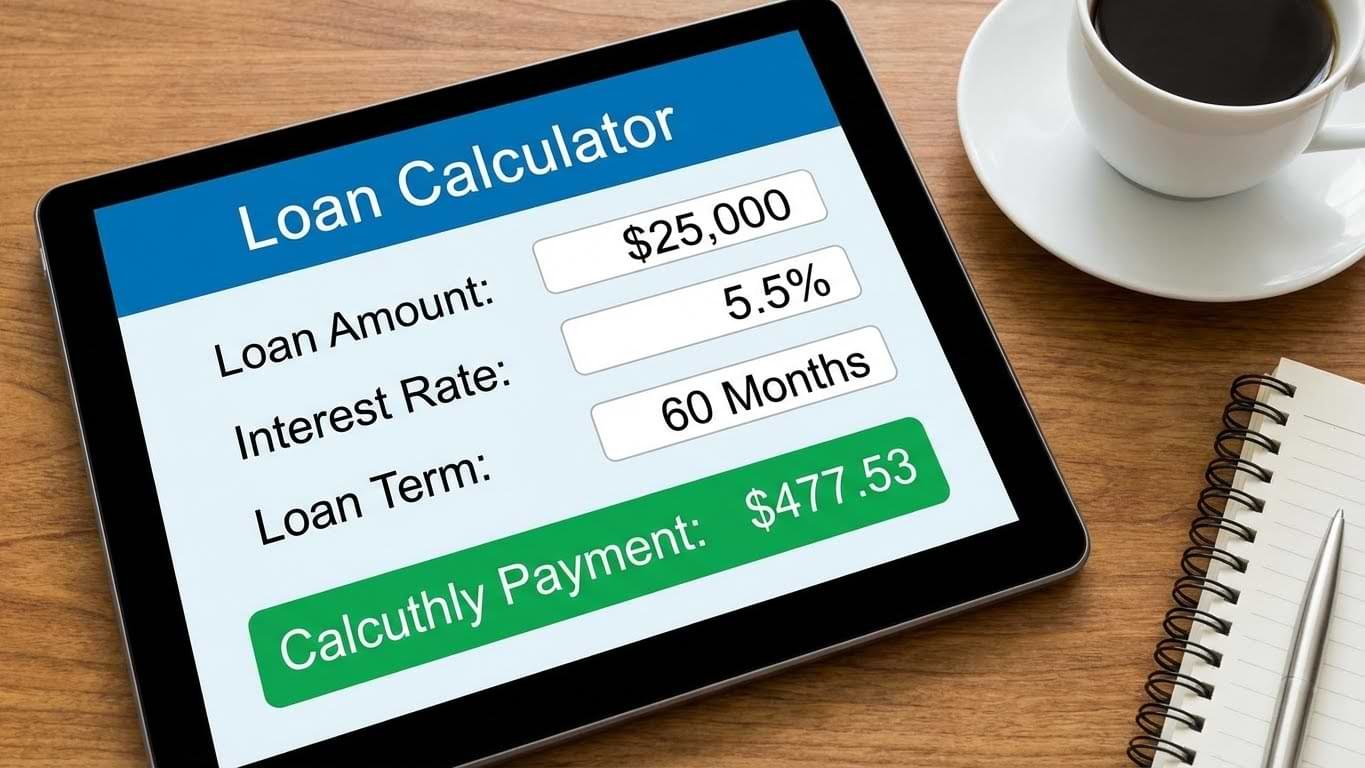
Using the EMI formula, the EMI comes to around ₹11,122.


What Does Your EMI Actually Include?

Every EMI has two parts:

  1. Interest portion

  2. Principal portion

In the early months:

  • Interest portion is higher

  • Principal repayment is lower

In the later months:

  • Interest portion reduces

  • Principal repayment increases


What Is an Amortization Schedule?

An amortization schedule shows:

  • Monthly EMI breakup

  • How much goes to interest

  • How much goes to principal

  • Remaining loan balance

It helps borrowers understand how the loan reduces over time.


Why Is Interest Higher in Early EMIs?

Because interest is calculated on:

  • Outstanding loan balance

At the start:

  • Outstanding balance is high

  • Interest amount is high

As principal reduces:

  • Interest amount also reduces


How Loan Tenure Affects EMI

Short Tenure Loan:

  • Higher EMI

  • Lower total interest

  • Faster loan closure

Long Tenure Loan:

  • Lower EMI

  • Higher total interest

  • Longer repayment stress

Choosing the right tenure is very important.


How Interest Rate Changes EMI

Even a small interest rate change can affect EMI.

Example:

On a ₹10 lakh loan:

  • 8% interest → lower EMI

  • 10% interest → higher EMI

Over long tenure, this difference becomes very large.


Fixed EMI vs Variable EMI

Fixed EMI Loans:

  • EMI remains same

  • Easier budgeting

  • Mostly personal loans

Variable EMI Loans:

  • EMI may change

  • Linked to market rates

  • Common in home loans


How EMI Is Calculated for Different Loan Types

Personal Loan EMI

  • Fixed interest rate

  • Fixed EMI

  • Short tenure

Home Loan EMI

  • Variable interest rate

  • EMI may change

  • Long tenure

Car Loan EMI

  • Medium tenure

  • Fixed or variable rate


How Prepayment Affects Loan EMI

Prepayment means paying extra money before schedule.

Prepayment helps:

  • Reduce principal faster

  • Lower interest amount

  • Shorten loan tenure

Some banks reduce EMI, others reduce tenure.


How EMI Changes with Part Payment

If you pay extra ₹50,000 on a loan:

  • Outstanding balance reduces

  • Future interest reduces

  • EMI or tenure changes

Always ask bank how they adjust prepayment.


How to Reduce Loan EMI Legally

You can reduce EMI by:

  • Choosing longer tenure

  • Negotiating lower interest rate

  • Improving credit score

  • Making prepayments

  • Refinancing loan

Smart planning saves money.


How Credit Score Affects EMI

Higher credit score:

  • Lower interest rate

  • Lower EMI

  • Better loan terms

Low credit score:

  • Higher interest

  • Higher EMI

  • More rejection risk


Why EMI Calculators Are Helpful

Online EMI calculators:

  • Show EMI instantly

  • Help compare loans

  • Save time

  • Avoid calculation mistakes

They don’t affect your credit score.


Common EMI Calculation Mistakes Borrowers Make

❌ Ignoring total interest paid
❌ Choosing lowest EMI blindly
❌ Not checking interest type
❌ Forgetting processing fees

Always look at the full picture.


EMI vs Total Loan Cost: What Matters More?

Low EMI may look attractive, but:

  • Total interest may be high

Always check:

  • Total amount payable

  • Interest paid over tenure


How EMI Affects Monthly Budget

Ideal EMI:

  • Should not exceed 40–50% of monthly income

Higher EMI can:

  • Increase stress

  • Reduce savings

  • Cause missed payments


Should You Choose Low EMI or Short Tenure?

Choose based on:

  • Income stability

  • Financial goals

  • Future plans

Balanced EMI is always best.


EMI Calculation for Self-Employed People

Banks check:

  • Income stability

  • Business cash flow

  • Existing liabilities

EMI calculation is same, but eligibility differs.


Loan EMI Myths You Should Avoid

❌ EMI is same for everyone
❌ Longer tenure is always better
❌ EMI includes only interest
❌ EMI never changes

Knowing facts helps avoid mistakes.


Final Thoughts: Understand EMI Before Taking Any Loan

Loan EMI is not complicated if you understand:

  • Principal

  • Interest

  • Tenure

A borrower who understands EMI:

  • Saves money

  • Avoids stress

  • Makes better financial decisions

Always calculate EMI before signing any loan agreement.


Frequently Asked Questions (FAQs)

Q1. What is EMI in simple words?

EMI is the monthly amount you pay to repay a loan.

Q2. Does EMI include interest?

Yes, EMI includes both interest and principal.

Q3. Can EMI change during loan tenure?

Yes, for variable interest rate loans.

Q4. Is lower EMI always better?

Not always. Lower EMI may mean higher total interest.

Q5. Can EMI be reduced later?

Yes, through prepayment or refinancing.


Google AdSense & Google AdX Policy Disclaimer

This article is written only for educational and informational purposes.
It does not guarantee loan approval or financial results.
The content follows Google AdSense and Google AdX policies and is safe for monetized finance websites.

Fixed vs Variable Interest Rates: Which Loan Option Is Better?

Fixed vs Variable Interest Rates

When you take any loan—personal loan, home loan, education loan, car loan, or business loan—one of the most important decisions you must make is choosing the interest rate type.

Almost every lender gives you two main options:

  • Fixed Interest Rate

  • Variable (Floating) Interest Rate

Many borrowers ignore this choice or don’t fully understand it. Later, they feel confused when their EMI changes or when they realize they paid more interest than expected.

So the big question is:

👉 Fixed vs variable interest rates: which loan option is better for you?
👉 Which one saves more money in the long run?
👉 Which option is safer and less stressful?

This guide explains everything in simple English, step by step, so you can make a smart decision.


What Is an Interest Rate in Simple Words?

An interest rate is the cost of borrowing money.

When a bank gives you a loan:

  • You return the principal amount

  • You also pay extra money called interest

This interest is charged as a percentage per year, known as the loan interest rate.


What Is a Fixed Interest Rate?

A fixed interest rate means:

The interest rate stays the same for the entire loan period.

No matter what happens in the market:

  • Your interest rate does not change

  • Your EMI remains the same

Example of Fixed Interest Rate

If you take a loan at 10% fixed interest for 5 years:

  • The rate stays 10% every year

  • Your monthly EMI stays stable


What Is a Variable (Floating) Interest Rate?

A variable interest rate changes over time.

It depends on:

  • Market interest rates

  • Central bank policies

  • Repo rate changes

Example of Variable Interest Rate

If your loan is linked to the repo rate:

  • EMI can go up or down

  • Interest rate may increase or decrease during the loan tenure


Why Do Banks Offer Fixed and Variable Interest Rates?

Banks offer both options because:

  • Fixed rates give stability

  • Variable rates adjust with market conditions

This allows borrowers to choose based on:

  • Risk comfort

  • Income stability

  • Long-term planning


Fixed vs Variable Interest Rates: Key Difference at a Glance

Feature Fixed Interest Rate Variable Interest Rate
EMI amount Same throughout Changes over time
Risk level Low risk Medium to high risk
Planning Easy Uncertain
Initial interest Usually higher Usually lower
Market impact No effect Direct impact
Best for Budget planners Risk-takers

Which Loans Usually Offer Fixed Interest Rates?

Common loans with fixed rates:

  • Personal loans

  • Credit card EMIs

  • Short-term business loans

  • Consumer durable loans

These loans are usually short-term, so banks can manage risk easily.


Which Loans Usually Offer Variable Interest Rates?

Variable rates are common in:

  • Home loans

  • Education loans

  • Long-term business loans

  • Some car loans

These loans have long tenures, so variable rates help banks adjust to economic changes.


How Fixed Interest Rates Affect Your EMI

Why EMIs Stay Stable

Since the rate doesn’t change:

  • EMI remains same every month

  • Budgeting becomes easy

  • No surprise increases

This is helpful for:

  • Salaried individuals

  • First-time borrowers

  • People with fixed monthly income


How Variable Interest Rates Affect Your EMI

With variable rates:

  • EMI may increase when rates rise

  • EMI may decrease when rates fall

This uncertainty can:

  • Affect monthly budgeting

  • Increase total interest cost if rates rise

But it can also:

  • Reduce EMI when rates drop

  • Save money during low-interest periods


Which Option Is Cheaper in the Long Run?

This depends on market conditions.

Fixed Interest Rate Cost

  • Usually higher at the start

  • Predictable total interest

  • No benefit when rates fall

Variable Interest Rate Cost

  • Lower initial rate

  • Can become expensive if rates rise

  • Cheaper if interest rates fall over time

There is no one-size-fits-all answer.


Fixed vs Variable Interest Rates for Home Loans

Why Variable Rates Are Popular for Home Loans

  • Long tenure (15–30 years)

  • Lower starting interest

  • Linked to repo rate

But:

  • Even a 1% rise can increase EMI a lot

Who Should Choose Fixed Home Loan Rate?

  • People near retirement

  • Fixed income households

  • Risk-averse borrowers


Fixed vs Variable Interest Rates for Personal Loans

Most personal loans have:

  • Fixed interest rates

  • Fixed EMIs

This helps borrowers:

  • Plan monthly expenses

  • Avoid surprises

Variable rates are rare in personal loans.


Which Is Better for First-Time Borrowers?

For beginners:

  • Fixed interest rate is safer

  • Easy to understand

  • Less stress

New borrowers may not be ready to handle EMI fluctuations.


How Inflation Affects Fixed and Variable Rates

When inflation rises:

  • Central banks increase interest rates

  • Variable loan EMIs increase

  • Fixed loan EMIs stay same

So during high inflation periods, fixed rates feel safer.


How Repo Rate Impacts Variable Interest Loans

Variable loans are often linked to:

  • Repo rate

  • MCLR

  • External benchmark rates

When the central bank increases repo rate:

  • Variable loan interest increases

  • EMI or tenure changes

Fixed loans remain unaffected.


Can You Switch Between Fixed and Variable Rates?

Yes, many banks allow:

  • Fixed to variable conversion

  • Variable to fixed conversion

But:

  • Conversion fees may apply

  • Terms depend on lender

Always check loan agreement carefully.


Hidden Costs You Should Know About

Some lenders:

  • Advertise “fixed rate” but change later

  • Offer fixed rate only for initial years

Always read:

  • Loan terms

  • Interest reset clauses

  • Conversion charges


Fixed vs Variable Interest Rates: Risk Comparison

Fixed Rate Risk

  • You may pay more if market rates fall

  • Less flexibility

Variable Rate Risk

  • EMI can rise suddenly

  • Long-term cost uncertainty

Your risk tolerance decides the best option.


Which Option Is Better During Low Interest Rate Periods?

When rates are low:

  • Variable interest rates are attractive

  • EMI savings possible

But remember:

  • Rates don’t stay low forever


Which Option Is Better During High Interest Rate Periods?

When rates are high:

  • Fixed interest rates offer protection

  • EMI remains predictable

This helps with long-term planning.


How to Decide Between Fixed and Variable Interest Rates?

Ask yourself:

  • Is my income stable?

  • Can I handle EMI increases?

  • How long is my loan tenure?

  • Am I comfortable with risk?

Your answers will guide you.


Fixed vs Variable Interest Rates for Business Loans

Businesses with:

  • Stable cash flow → Variable rate

  • Seasonal income → Fixed rate

Business owners must consider income uncertainty carefully.


Common Myths About Fixed and Variable Interest Rates

❌ Fixed rates are always expensive
❌ Variable rates are always cheaper
❌ Fixed loans never change
❌ Variable loans always increase EMI

Reality is more balanced.


Simple Rule to Choose the Right Option

  • Short-term loan → Fixed interest rate

  • Long-term loan → Variable interest rate (if risk-tolerant)

  • Fixed income → Fixed rate

  • Flexible income → Variable rate


Final Thoughts: Which Loan Option Is Better?

There is no universal winner.

  • Fixed interest rates offer peace of mind

  • Variable interest rates offer potential savings

The best option depends on:

  • Your income

  • Your risk comfort

  • Loan tenure

  • Market conditions

A smart borrower chooses what fits their life, not just the lowest rate.


Frequently Asked Questions (FAQs)

Q1. Is fixed interest rate always safe?

Yes, but it may cost more if rates fall.

Q2. Can variable interest rate EMI increase suddenly?

Yes, when market rates rise.

Q3. Which option saves more money?

Variable rate can save money if interest rates stay low.

Q4. Can I change interest rate type later?

Many banks allow switching with charges.

Q5. Which is better for beginners?

Fixed interest rate is usually better.


Google AdSense & Google AdX Policy Note

This article is written only for educational and informational purposes.
It does not promise guaranteed savings or financial returns.
All information follows Google AdSense and Google AdX content policies, making it suitable for monetized finance websites.

Personal Loan Eligibility Criteria Explained

Personal Loan Eligibility

A personal loan is one of the most popular financial products in today’s world. People use it for medical emergencies, education, travel, weddings, home renovation, and even debt consolidation.

But before any bank or NBFC gives you a personal loan, they first check something very important — your eligibility.

Many loan applications get rejected not because people don’t need money, but because they don’t meet the eligibility criteria.

So the big question is:

👉 What is personal loan eligibility?
👉 How do banks decide who gets a loan and who doesn’t?
👉 How can you improve your eligibility and get approved easily?

This guide explains everything in simple English, step by step.


What Is a Personal Loan?

A personal loan is an unsecured loan. This means:

  • You don’t need to give property or gold as security

  • Approval is based on income, credit score, and repayment ability

  • Interest rates are higher than secured loans

Because there is no collateral, banks are extra careful while checking eligibility.


What Does Personal Loan Eligibility Mean?

Personal loan eligibility means:

Whether you meet the bank’s rules to repay the loan on time.

Banks want to be sure of three things:

  1. You earn regularly

  2. You have a good repayment history

  3. You can afford monthly EMIs

If these three look safe, approval chances increase.


Why Is Personal Loan Eligibility Important?

Eligibility decides:

  • Whether your loan gets approved or rejected

  • How much loan amount you get

  • What interest rate you are offered

  • How fast the loan is disbursed

Even a small improvement in eligibility can:

  • Save thousands in interest

  • Increase loan amount

  • Reduce EMI burden


What Are the Main Personal Loan Eligibility Criteria?

Most banks and financial institutions check the following factors:

  • Age

  • Employment type

  • Monthly income

  • Credit score

  • Work experience

  • Existing loans

  • Debt-to-income ratio

  • City of residence

Let’s understand each one clearly.


Age Criteria for Personal Loan

Why Age Matters?

Banks prefer borrowers who:

  • Are earning now

  • Will continue earning till loan ends

Typical Age Requirement

  • Minimum age: 21 years

  • Maximum age: 58–60 years

Younger applicants may get smaller loan amounts, while middle-aged salaried professionals get higher approval.


Employment Type and Its Impact on Eligibility

Your job type directly affects eligibility.

Salaried Employees

Banks prefer:

  • Private company employees

  • Government employees

  • PSU staff

Why?

  • Stable monthly income

  • Lower risk

Self-Employed Individuals

Eligible, but banks check:

  • Business stability

  • Income consistency

  • Tax returns

Self-employed applicants often face:

  • Higher interest rates

  • More documentation


Minimum Income Requirement for Personal Loan

Income shows your repayment ability.

Typical Income Criteria

  • Metro cities: ₹25,000 – ₹30,000 per month

  • Non-metro cities: ₹15,000 – ₹25,000 per month

Higher income = higher loan eligibility.


Why Credit Score Is the Most Important Factor

Your credit score is a financial report card.

Credit Score Ranges

  • 750+ → Excellent

  • 700–749 → Good

  • 650–699 → Average

  • Below 650 → Risky

Why Banks Care About Credit Score

  • Shows payment discipline

  • Indicates past loan behavior

  • Predicts future risk

A high credit score:

  • Increases approval chances

  • Lowers interest rates

  • Speeds up processing


How Credit History Affects Personal Loan Approval

Credit history includes:

  • Past loans

  • Credit card usage

  • Payment delays

  • Loan defaults

Late payments or defaults reduce eligibility sharply.

Even one missed EMI can impact approval.


Work Experience and Job Stability

Banks prefer stability.

Salaried Applicants

  • Minimum work experience: 1–2 years

  • Current company: 6 months or more

Self-Employed Applicants

  • Business vintage: 2–3 years

  • Consistent income proof required

Stable work history means lower risk.


Debt-to-Income Ratio Explained Simply

This ratio shows:

How much of your income is already used to repay loans.

Ideal Debt-to-Income Ratio

  • Below 40% is safe

  • Above 50% is risky

Example:
If your monthly income is ₹50,000 and EMIs are ₹25,000 → risky.

Lower ratio improves eligibility.


Existing Loans and Credit Cards Impact

Banks check:

  • Home loan EMIs

  • Car loan EMIs

  • Credit card outstanding

  • Buy-now-pay-later plans

Too many active loans reduce approval chances.


City and Location Also Matter

Applicants living in:

  • Metro cities

  • Tier-1 cities

Often get:

  • Higher loan limits

  • Faster approval

Rural or smaller towns may face stricter rules.


Documents Required for Personal Loan Eligibility

Common Documents

  • Aadhaar card

  • PAN card

  • Salary slips / Income proof

  • Bank statements

  • Address proof

  • Employment details

Self-employed applicants need:

  • ITR returns

  • Business registration proof


How Banks Calculate Your Personal Loan Eligibility Amount

Banks use formulas like:

  • EMI affordability

  • Income stability

  • Credit score

  • Loan tenure

Simple Rule

Your EMI should not exceed 40–50% of monthly income.


How to Check Personal Loan Eligibility Online

Most banks offer:

  • Online eligibility calculators

  • Instant checks without credit score impact

Benefits:

  • No paperwork

  • Quick results

  • Compare lenders easily


Common Reasons Why Personal Loan Applications Get Rejected

  • Low credit score

  • High existing EMIs

  • Unstable income

  • Short job tenure

  • Incorrect documents

  • Multiple recent loan inquiries

Knowing reasons helps avoid rejection.


How to Improve Personal Loan Eligibility Quickly

Simple Steps

  • Pay EMIs on time

  • Reduce credit card balance

  • Avoid multiple loan applications

  • Increase income proof

  • Correct credit report errors

Even small improvements help.


Personal Loan Eligibility for Self-Employed People

Self-employed eligibility depends on:

  • Business income

  • ITR filing

  • Profit consistency

  • Industry type

Professional businesses get better approval.


Does Gender or Marital Status Matter?

No direct impact, but:

  • Dual income families may get higher loan amounts

  • Single applicants rely fully on individual income

Banks focus on numbers, not personal life.


Personal Loan Eligibility vs Loan Approval

Eligibility means:

  • You meet basic conditions

Approval means:

  • Bank agrees to give loan

Meeting eligibility does not guarantee approval, but it improves chances greatly.


Should You Apply Even If Eligibility Is Low?

Applying repeatedly can:

  • Reduce credit score

  • Increase rejection chances

It’s better to:

  • Improve eligibility first

  • Apply when chances are strong


Personal Loan Myths That Confuse Borrowers

❌ Only salaried people get loans
❌ High income guarantees approval
❌ Credit score doesn’t matter
❌ Personal loans are always expensive

Understanding truth saves time and money.


Final Thoughts: Eligibility Is About Responsibility

Personal loan eligibility is not about luck.
It’s about financial discipline.

If you:

  • Earn regularly

  • Pay bills on time

  • Control debt

Banks will trust you with money.


Frequently Asked Questions (FAQs)

Q1. What is the minimum credit score for a personal loan?

Usually 700 or above is preferred.

Q2. Can I get a personal loan without income proof?

Very difficult; income proof is essential.

Q3. Does checking eligibility reduce credit score?

No, eligibility checks don’t affect score.

Q4. Can self-employed people get personal loans?

Yes, with proper income documents.

Q5. How long does approval take?

From a few hours to a few days.


Google AdSense & Google AdX Policy Disclaimer

This article is written for educational and informational purposes only.
It does not offer financial guarantees or misleading claims.
All content complies with Google AdSense and Google AdX policies, making it suitable for monetized websites.